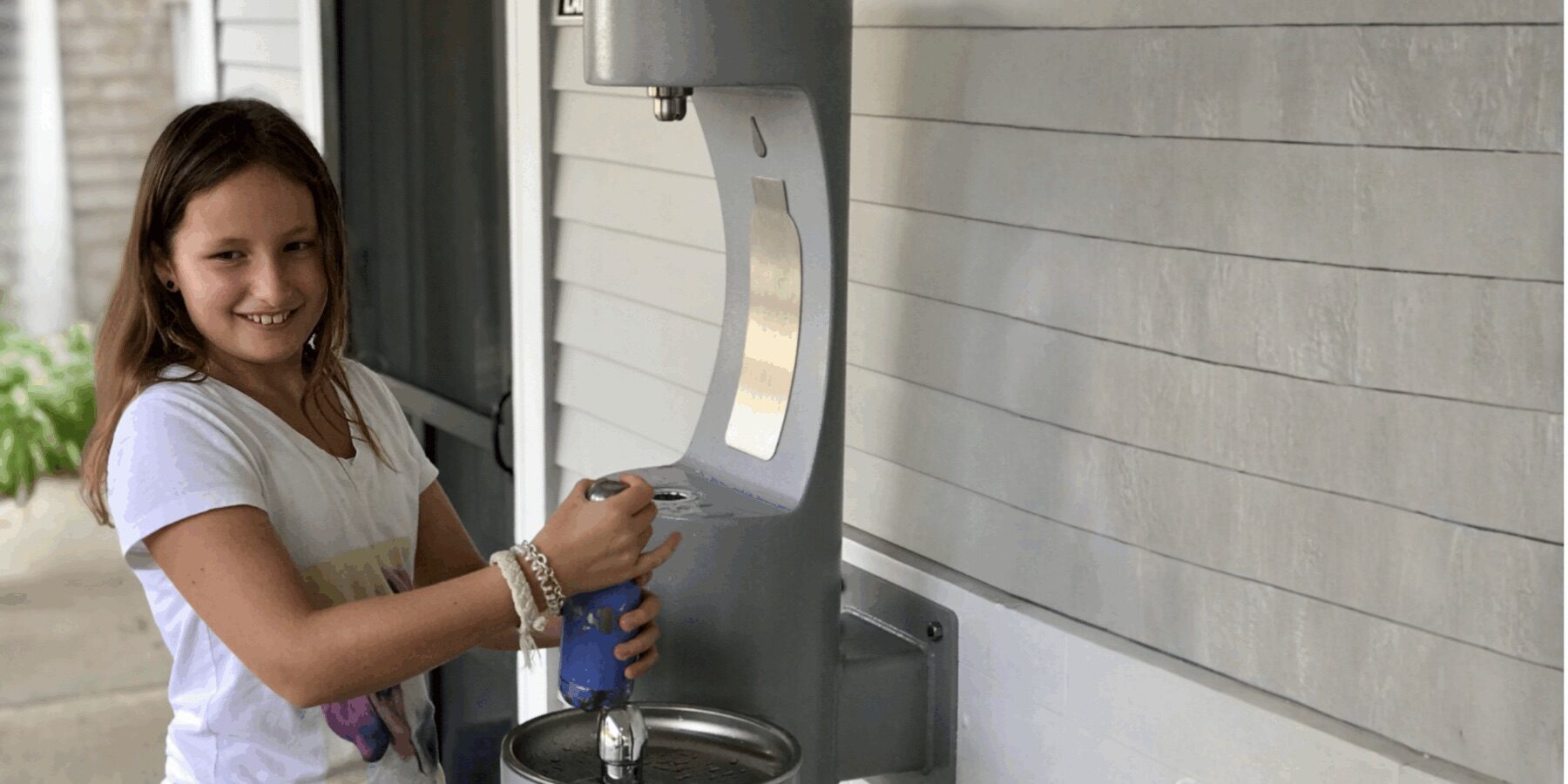
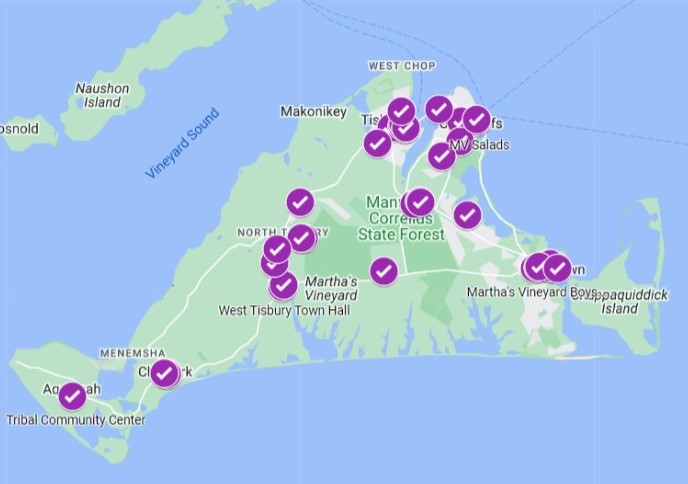
There are now 42 locations across Martha’s Vineyard where you can refill your water bottle—and the Vineyard Conservation Society is proud to have installed 32 of them!
Every school on the Island now has a refill station. Many of our public buildings and family-friendly facilities are also equipped with these convenient units.
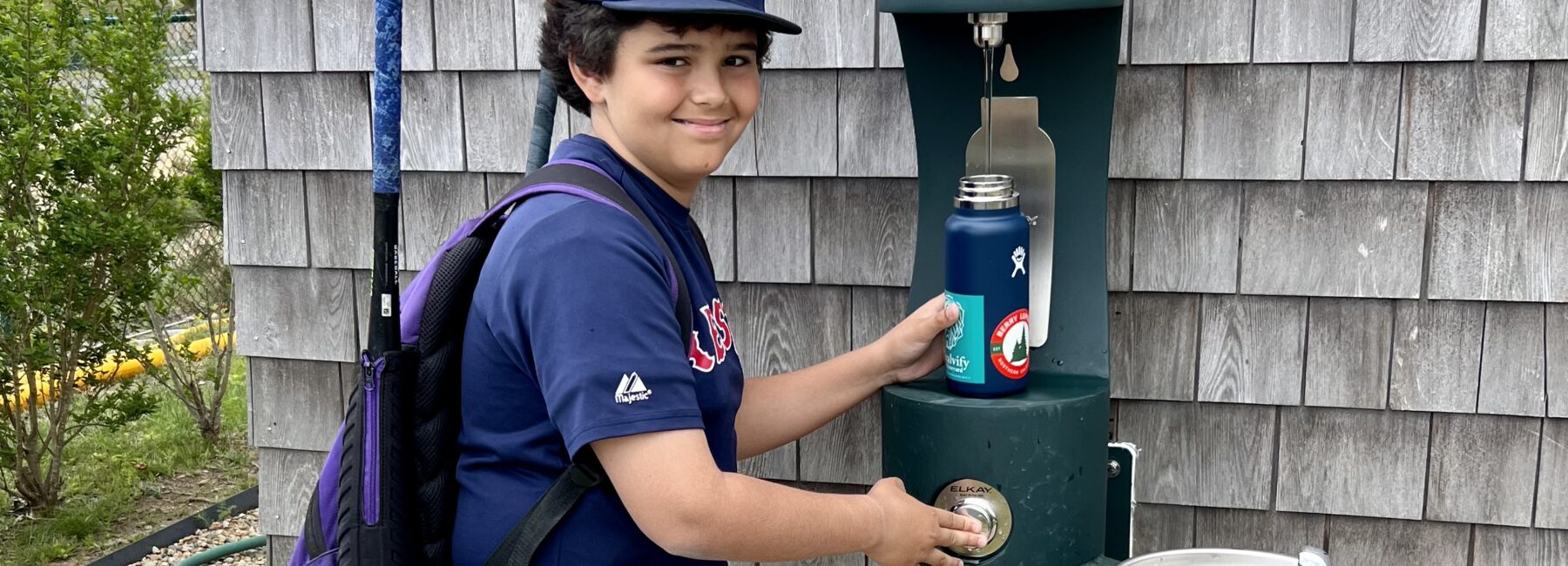
Even before the campaign to reduce single-use plastic bottles, VCS was laying the groundwork for Take Back the Tap, installing water bottle refill stations across the Island. These stations deliver chilled, filtered water quickly and conveniently—making it easier than ever to skip the store-bought bottle.
Our goal is simple: build a highly visible network that reduces the need for bottled water while showing residents and visitors just how fortunate we are to have excellent Island drinking water—and encouraging everyone to make the most of it.
Consumption and mindfulness
There are situations where bottled water is entirely justifiable. Following natural disasters, it can be a necessary part of relief efforts. In many places around the globe, public infrastructure does not provide adequate drinking water; bottled water here may take the form of a 20-liter jug inside homes, similar to the office “water cooler.” And while the crisis in Flint, MI, is the rare exception to the rule that municipal drinking water in the USA is safe, it is nonetheless a very real issue.
Yet none of this has anything to do with why, at the beach and the ballgame, the cooler full of ice water has been replaced by a cooler full of iced water bottles. The goal of the Take Back the Tap initiative is to significantly reduce an unnecessary source of waste — and, more broadly, to foster a sense of mindfulness regarding our consumption habits.
We consume fifty million single-use water bottles annually in the United States – 167 per person on average – and the overwhelming majority of this waste is not based on a well-founded concern over water quality.
In this country, tap water is more tightly regulated than bottled water, which often doesn’t meet the EPA’s municipal water-quality standards. Independent testing by the Environmental Working Group found 38 pollutants in various combinations in ten sampled brands.
Finally, we should look beyond the bottle to consider the broader impacts of transporting our drinking water. Pumping, processing, and bottling is a major contributor to climate change. The genuine Poland Spring in Maine dried up decades ago; will Nestlé, the owner of the water brand that bears its name, be more careful not to deplete the other springs it now sources from?
More astonishing is that much of today’s bottled water comes from municipal supplies in southern California and other western states, where severe drought has become a routine issue.
To import drinking water here, to our water-blessed Island, when in other places farmers, homeowners, industry, and the natural environment are desperately clawing for their share of a vital resource, is truly a marvel of modern economics that we need not be a part of any longer.
Let’s take back the tap!